AI News · 7 min read
What does ChatGPT Wallet mean for small online sellers?
Short answerChatGPT Wallet, launched by OpenAI on November 13, 2026, lets ChatGPT's agents (called “dots”) buy from regular online stores on a customer's behalf. The customer approves each purchase, and your store receives a one-time network token instead of the real card number. OpenAI says no Wallet-specific integration is required, but bot protection and fraud filters can block or decline these orders by accident. For now it is limited to US ChatGPT Pro subscribers, so the smart move is to check your firewall and fraud settings before volume grows.
What did OpenAI launch on November 13?
OpenAI introduced ChatGPT Wallet, a way for its always-on agents, called dots, to check out on store websites for a user. The customer saves an eligible US-issued Visa, Mastercard or American Express card once, asks a dot to find and buy something, then reviews the items, the total and the card before approving with a check such as Face ID or a fingerprint (TechCrunch, November 13, 2026).
The rollout is deliberately small. At launch it is open only to US ChatGPT Pro subscribers aged 18 and over, and OpenAI is not taking a cut of transactions for now (CNBC, November 13, 2026). CNBC also reported that ChatGPT has more than 1.2 billion weekly users and nearly 100 million paying users, so even a narrow start reaches a large audience over time. OpenAI has said spending limits, pre-approved purchases and support at more retailers are planned.
Not every big seller is playing along. Both reports note that Amazon blocks outside AI agents from buying on its site, and CNBC adds that United Airlines plans to block agents from booking tickets. That leaves room for smaller stores that are easy for an agent to use.
How does an AI agent pay on your website?
Think of the payment token as a valet key. A valet key starts the car for one job but will not open the trunk or the glovebox. In the same way, the card network issues a token that works for that one approved purchase. According to OpenAI's merchant guide, you receive a network token, not the full card number, and the customer consents only to that specific transaction, so you must not save and reuse it for a different order (OpenAI, Accept payments guide).
To your checkout, the order looks much like a normal card payment. The dot moves through your pages in a cloud browser, fills in the shipping and contact details, and submits the order. OpenAI says Wallet “works out of the box” with existing checkout pages and payment forms. Your business still handles the order, fulfillment, customer support and fraud decisions.
That last part matters. If an agent buys the wrong size, the return comes to you, not to OpenAI. OpenAI's guidance says support should be handled the same way as if the customer had placed the order themselves.
Why might your store turn these buyers away without knowing it?
Two common tools can get in the way.
- Bot protection. Firewalls and CDNs are built to stop automated visitors. A shopping agent is, by design, an automated visitor. OpenAI warns that security settings may “unintentionally block” its cloud browser (OpenAI, cloud browser access guide).
- Fraud filters. Risk systems look at signals such as the IP address and browser details. An order placed from a cloud browser can look unusual, so a legitimate purchase may be declined. OpenAI is starting to pass the shopper's real signals, such as country, time zone and network prefix, in a standard
Forwardedheader, and suggests asking your risk provider whether it reads those signals.
Here is a second way to picture it. A shopping agent is like a delivery driver at a gated community. The guard should not wave every car through, but a driver with a verified badge should not be turned away either. OpenAI's badge is a standard called Web Bot Auth: signed requests that your CDN can check against OpenAI's published keys. The guide says Akamai, Cloudflare, HUMAN and Vercel verify these signatures automatically. On Cloudflare, for example, the traffic appears as dots, OpenAI under Personal Agents, where you can set it to allow.
If you blocked AI crawlers earlier this year, note that this is a different thing. A crawler collects content; a shopping agent is a customer's assistant trying to buy. Our guide to opting out of AI training with robots.txt explains the crawler side, and you can keep that choice while still letting verified shoppers in.
Is AI shopping big enough to care about this season?
It is still small, but it is growing quickly. Adobe expects traffic to US retail sites from people clicking links in AI tools to rise 130% year over year between November 1 and December 31, with Thanksgiving up 159% (Adobe, September 28, 2026). In the same release, 69% of surveyed shoppers who used AI said they were less likely to return what they bought.
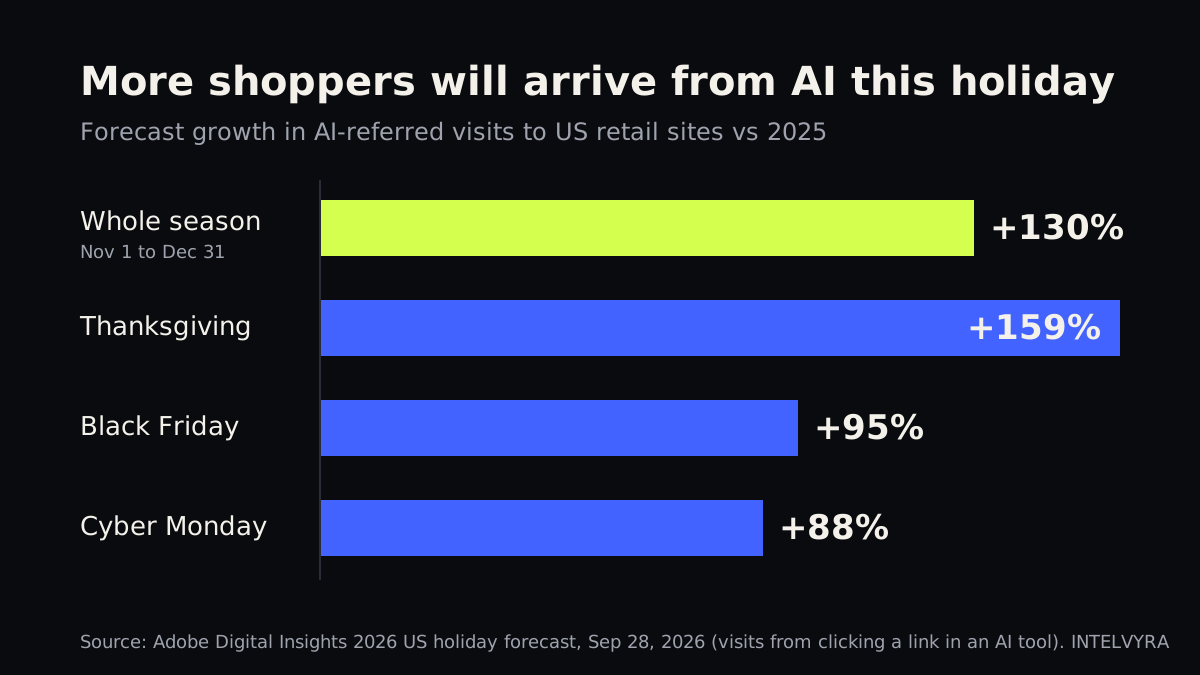
For context, last season's AI-referred traffic rose 693.4%, on a total of $257.8 billion spent online (Adobe, January 7, 2026). The base is low, and Wallet itself is limited to Pro users. A sensible reading: you do not need a big project, but a store that silently blocks agents is leaving early buyers to competitors.
Do you need a plugin, a product feed, or neither?
For most small stores, start with neither. OpenAI's documentation says sites do not need a product feed or a plugin for verified ChatGPT users to use them, and Wallet needs no special integration either. Those are optional upgrades:
| Option | What it does | Who it suits |
|---|---|---|
| Do nothing extra | Agents use your normal site and checkout | Every store, as long as nothing blocks them |
| Claim your business and submit a product feed | Helps ChatGPT show current prices and stock | Stores with many products or frequent price changes |
| Build a plugin | Lets ChatGPT call your systems directly for availability, carts or bookings | Businesses with complex options, such as reservations or custom orders |
Our walkthrough on how to claim your business on ChatGPT covers the free profile and feed. A plugin is a real software project; that is the kind of connection our AI integration services team builds and tests. If your checkout itself is slow or fragile, fixing it through web development helps human shoppers and agents alike.
What should you do this week?
- Check your firewall or CDN. Find the bot settings and confirm verified ChatGPT agent traffic is allowed. On Cloudflare, look for dots, OpenAI under Personal Agents.
- Email your payment and fraud providers. Ask one question: “How do you recognize ChatGPT Wallet orders, and do you read the Forwarded header?” If you use a hosted platform, ask its support team the same thing.
- Watch declines. Over the holiday weeks, look for declined orders with unfamiliar browser details and review a few by hand before blocking that pattern.
- Tidy your product pages. Clear prices, sizes, stock status, shipping costs and return rules help an agent pick the right item, and cut avoidable returns.
- Update your support script. Tell your team that an order placed by an agent is still the customer's order. Our guide on whether AI agents are safe for small business covers the wider risks.
If you would like a second pair of eyes on your store's settings or a plan for agent-ready checkout, book a free AI strategy call with INTELVYRA.
Frequently asked questions
Do I have to sign up to accept ChatGPT Wallet payments?
No. OpenAI says ChatGPT Wallet works with existing checkout pages and payment forms and needs no Wallet-specific integration. The main job is making sure your bot protection and fraud tools do not block or decline verified agent orders.
Does my store see the customer's card number?
No. You receive a network token for that one approved purchase. OpenAI's guide says not to save or reuse it for a different order, and to use the Payment Account Reference if you need to link it to the underlying account.
Who handles returns and refunds for orders placed by an AI agent?
Your business does. OpenAI's merchant guidance says you handle the order, fulfillment, support and fraud decisions, and that support should work the same way as if the customer had placed the order themselves.
Sources
- TechCrunch, November 13, 2026 — techcrunch.com
- CNBC, November 13, 2026 — www.cnbc.com
- OpenAI, Accept payments guide — developers.openai.com
- OpenAI, cloud browser access guide — developers.openai.com
- Adobe, September 28, 2026 — news.adobe.com
- Adobe, January 7, 2026 — news.adobe.com
Written and reviewed by the INTELVYRA team. Prices and figures were checked on the date above and can change. Always confirm current pricing with each provider.